

When a tooth is damaged or missing, Dr. Burk may recommend a dental crown or bridge to restore your smile. Although both are common restorative dentistry treatments, they serve different purposes.
A dental crown is generally used to restore and protect an existing tooth that has been damaged, weakened, or significantly restored. A dental bridge, on the other hand, is designed to replace one or more missing teeth by using surrounding teeth or dental implants for support.
So, how do you know whether you need a crown or a bridge?
The answer depends largely on whether you are restoring an existing tooth or replacing a tooth that is no longer there. At Take 2 Dental Implant Studio in Anchorage, AK, patients can discuss their restorative and tooth replacement options with a skilled implant dentist and team focused on comprehensive implant and restorative care.
What Is a Dental Crown?
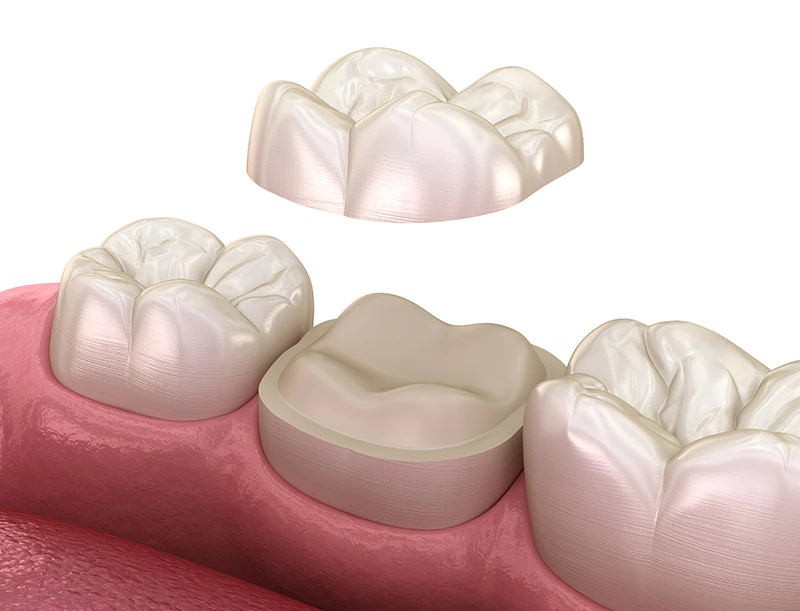 A dental crown is a custom-made restoration that fits over a damaged or weakened tooth. Sometimes called a "cap," a crown covers the visible portion of the tooth above the gumline.
Dental crowns can be made from several materials, including porcelain, ceramic, zirconia, metal, or combinations of materials. The appropriate material depends on factors such as the location of the tooth, your bite, cosmetic goals, and the amount of tooth structure remaining.
When Might I Need a Crown?
Dr. Guy Burk may recommend a dental crown if a tooth is:
- Severely weakened or damaged
- Cracked or fractured
- Heavily restored with a large filling
- Worn down
- Misshapen
- Discolored and not a good candidate for more conservative cosmetic treatment
- Being restored after root canal treatment
A crown can restore the tooth's shape and function while helping protect the remaining natural tooth structure.
What Is a Dental Bridge?
A dental bridge is a restoration used to replace one or more missing teeth.
A traditional bridge typically consists of one or more artificial teeth, called pontics, connected to dental crowns that fit over neighboring teeth. These neighboring teeth serve as anchors for the bridge.
There are several types of dental bridges, including traditional bridges, cantilever bridges, Maryland bridges, and implant-supported bridges.
The best type of dental bridge for your smile will depend on where the missing tooth or teeth are located, the health of surrounding teeth, your bite, and your overall treatment goals.
Crown vs. Bridge: What's the Difference?
The easiest way to think about the difference is:
A crown restores a tooth. A bridge replaces a missing tooth.
A crown is placed over an existing tooth or, in some cases, over a dental implant.
A dental bridge fills the space created by missing teeth.
For example, if you have a large cavity that has weakened a tooth but the tooth can still be saved, your dentist may recommend a crown.
If you have lost a tooth and want to fill the resulting gap, a bridge may be an option.
When Is a Crown Better Than a Bridge?
A dental crown is generally the more appropriate treatment when your natural tooth is still present and can be restored.
For example, imagine you have a cracked molar with enough healthy tooth structure remaining to support a restoration. Removing the tooth and replacing it with a bridge would not typically be the first choice if the natural tooth can be predictably saved.
Preserving a natural tooth is often preferable when it has a reasonable long-term prognosis.
A crown can provide the protection that a significantly weakened tooth needs while allowing you to retain your natural tooth.
When Is a Bridge Better Than a Crown?
A bridge may be considered when a tooth is already missing, and you want to restore the space.
A crown alone cannot replace a missing tooth because it needs a structure to support it. A traditional bridge uses neighboring teeth as supports for the artificial tooth.
However, a bridge is not the only way to replace a missing tooth. Depending on your situation, your dentist may also recommend a dental implant.
Dental Bridge vs. Dental Implant
For patients with a missing tooth, one of the most important decisions may not be simply "crown or bridge?" but rather bridge or implant?
A dental implant replaces the root portion of a missing tooth with an implant post placed in the jawbone. A crown is then attached to the implant to replace the visible tooth.
This means an implant-supported crown can replace one missing tooth without relying on neighboring teeth for support.
A traditional bridge, in contrast, uses adjacent teeth or other structures to support the replacement tooth.
Neither option is automatically right for everyone. Dr. Burk will consider your bone health, gum health, surrounding teeth, bite, overall health, and preferences when recommending a treatment.
What If I Need Several Teeth Replaced?
If several adjacent teeth are missing, a bridge may be an option.
However, patients with multiple missing teeth may also benefit from discussing implant-supported treatment.
Implants can support individual crowns, implant bridges, or other implant-supported restorations. For patients with extensive tooth loss, full-arch implant solutions may also be considered.
This is particularly important at an implant-focused practice because tooth replacement doesn't have to be limited to traditional removable dentures or conventional bridges.
What Happens If I Need a Crown After a Root Canal?
A tooth that has undergone root canal treatment may be more susceptible to fracture because of the amount of tooth structure that may have been lost.
In many cases, a crown is recommended after root canal therapy to restore the tooth and protect it from the forces of chewing.
However, not every root canal-treated tooth automatically requires a crown. The recommendation depends on the tooth's location, remaining structure, functional demands, and other clinical factors.
During your consultation, Dr. Burk at Take 2 Dental Implant Studio will help you determine if a crown is right for your treatment plan.
How Long Do Crowns and Bridges Last?
Crowns and bridges are designed to be durable, but no restoration lasts forever. The longevity of a dental restoration can be affected by:
- Oral hygiene
- Gum health
- Tooth decay
- Bite forces
- Teeth grinding or clenching
- Diet and habits
- The quality and condition of supporting teeth
- Regular dental care
Brushing twice a day, flossing or cleaning between your teeth, and attending regular dental appointments can help protect your restoration.
If you grind or clench your teeth, your dentist may recommend a custom nightguard to help protect your teeth and restorations.
Can a Crown or Bridge Look Natural?
Modern dental restorations can be designed to closely match the appearance of your natural teeth.
For crowns and bridges in visible areas of the smile, your dentist can consider factors such as tooth color, shape, size, translucency, and surrounding teeth when planning the restoration.
The goal is to restore both function and appearance so that your restoration fits naturally into your smile.
What If My Tooth Can't Be Saved?
Sometimes a tooth is too damaged, infected, or structurally compromised to be predictably restored. If a tooth needs to be removed, your restorative dentist at Take 2 Dental Implant Studio can discuss tooth replacement options with you.
Depending on your needs, Dr. Burk may suggest options like:
- Dental implants
- Implant-supported bridges
- Traditional bridges
- Implant-supported dentures
- Other restorative solutions
At Take 2 Dental Implant Studio, the focus on implant dentistry allows patients to explore tooth replacement options that go beyond simply filling a space.
Do I Need a Crown or a Bridge?
The best way to answer that question is to determine whether the tooth is still present and whether it can be predictably restored.
If the tooth is present but significantly damaged, a crown may be appropriate. If the tooth is missing, a bridge or dental implant may be considered.
And if several teeth are missing or failing, a more comprehensive implant treatment plan may provide additional options.
At Take 2 Dental Implant Studio in Anchorage, AK, patients can receive personalized guidance about dental implants and restorative treatment based on their oral health, goals, and long-term needs.
If you're dealing with a damaged tooth, missing tooth, or failing dental work, don't assume that one type of restoration is automatically right for you. A thorough evaluation with Dr. Burk is the first step to determining if a crown, bridge, dental implant, or another treatment offers the most appropriate solution for your smile. Contact our office today to schedule your next visit!